Rule Sheet or Table Card: Two Places to Learn a Game
Rule sheet or table card? Learn which source answers setup, betting, payout and exception questions, so you can find the relevant rule without guesswork.

Rule sheet or table card: which should you consult when a game question comes up? Start with the kind of answer you need. A rule sheet usually explains how the game is organised; a table card keeps selected information close to the place where a decision is made.
They are not rival versions of one document. Each has a different job, and neither is automatically complete. A quick look at their layout can tell you where to begin—and when to check the other source.
A rule sheet explains the game as a whole
Rule sheets are built for learning and reference. They can set out the order of play, define terms, describe available choices and explain how a round ends. Because they have room for context, they can connect a rule to the situations in which it applies.
Look for sections such as “Object”, “How to play”, “Wagers” or “Payouts”. A rule sheet may distinguish a main wager from an optional side wager, then explain when each is placed or settled. That detail matters if you are trying to understand the logic of a rule rather than retrieve a single figure.
Its weakness is distance from the action. A printed booklet might be kept at a station or in a folder, while the table card sits in view. During play, finding one sentence in a longer document can take more attention than the question deserves.
A table card puts selected facts within reach
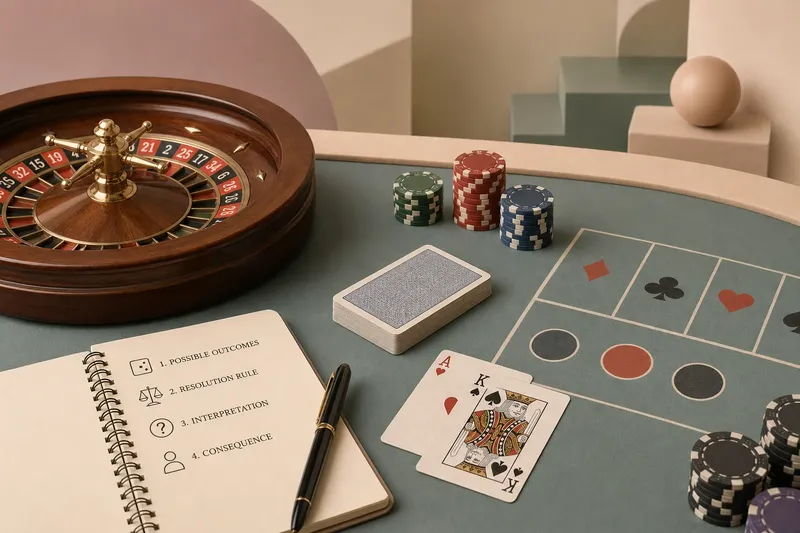
A table card is designed for quick consultation at the table. It may list hand rankings, permitted wagers, payout terms or a compact sequence of decisions. Large type and a fixed position make it easier to glance at than a page of prose.
That convenience comes from selection. The card usually favours information players need often or need to compare quickly. It may state what pays, but not explain the full procedure for resolving a disputed or unusual situation. A label such as “bonus” may appear without the conditions that define eligibility.
Read the card as a useful index, not as proof that every omitted rule does not exist. If a visible payout line seems to conflict with a broader rule, pause and locate the wording that governs that exact wager and situation.
Match the source to the question
Before searching, phrase the problem in plain terms. Are you asking what a term means, what action comes next, which outcome pays, or whether an exception applies? That distinction often points to the right document.
- For the sequence of play: start with the rule sheet. Find the section that describes when choices are made and when the round is settled.
- For a visible payout or ranking: start with the table card. Check that the line applies to the wager or hand you mean, not a nearby option.
- For a definition: check the rule sheet first, especially if the same word could refer to a hand, a wager or a stage of play.
- For an exception: use the rule sheet, then compare its wording with the relevant table-card entry. Exceptions often depend on a condition the card has no space to explain.
- For an apparent contradiction: read both sources in full around the relevant passage. If the discrepancy remains, ask the dealer or an authorised supervisor which posted rules apply before acting.
Say you are unsure whether a side wager wins on a particular hand. Find that wager’s line on the table card to see the listed result. Then use the rule sheet to check when the wager is eligible and how it is settled; the expected result is a clearer answer tied to the exact conditions, rather than a guess based on a similar-looking bet.
Use the wording, not the document’s appearance
A polished card can look definitive, while a plain sheet can seem secondary. Appearance does not settle authority. Read the wording closely: does it say “for reference”, give a complete condition, or refer elsewhere for details?
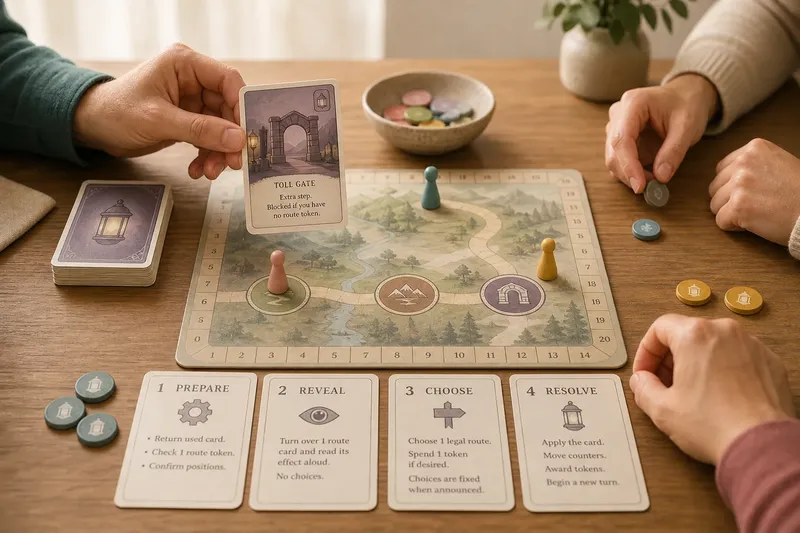
Also separate a summary from a rule. A card might show a sequence with arrows, while the sheet explains what happens if a player declines a choice. The diagram helps you orient yourself; the prose may resolve the edge case.
For casino play, table rules can vary by venue and game version. Check the posted wording and ask staff when the documents do not answer the question. Where a rule depends on the table’s displayed terms, those terms matter more than a remembered version from somewhere else.
Small reading habits prevent avoidable confusion
Use a deliberate search rather than scanning both documents at random.
- Name the issue. Reduce it to one question, such as “When is this wager settled?”
- Find the matching term. Search headings and labels before reading adjacent sections.
- Read the condition around it. Note words such as “only”, “before”, “after” and “unless”; they can change the scope of a rule.
- Check the other source when needed. Use the card to locate a quick reference and the sheet to fill in context, or reverse that order if a broad rule points you towards a specific figure.
- Ask before committing if it remains unclear. A concise question to the dealer is more useful than an assumption made mid-play.
It is not worth memorising every line on both documents before sitting down. Remember where each kind of information lives, and keep attention on the particular decision in front of you.
Which source answers which question?
Where do I learn the order of play?
Begin with the rule sheet, which is more likely to describe how a round moves from one decision to the next. Use the table card as a reminder if it presents the sequence in a compact form.
Where do I check a payout?
Look at the table card for a quick comparison of listed outcomes. If your wager or hand has a special condition, read the related rule-sheet section as well.
What should I do if the two sources seem to disagree?
Compare the exact wording and confirm that both passages refer to the same wager, game version and situation. If the conflict persists, ask the dealer or an authorised supervisor before placing or accepting a wager.
Can a table card teach the whole game?
It can orient you and answer common reference questions, but its limited space may leave procedures and exceptions unexplained. Use the rule sheet for the fuller account, then return to the card for information that is useful at a glance.
Keep one practical distinction in mind: the rule sheet is usually the better place to understand a condition, while the table card is usually the faster place to look up a selected fact. For a rule sheet or table card question that still has no clear answer, ask before play continues; resolving the wording first is simpler than trying to reconstruct what a brief label meant afterwards.